


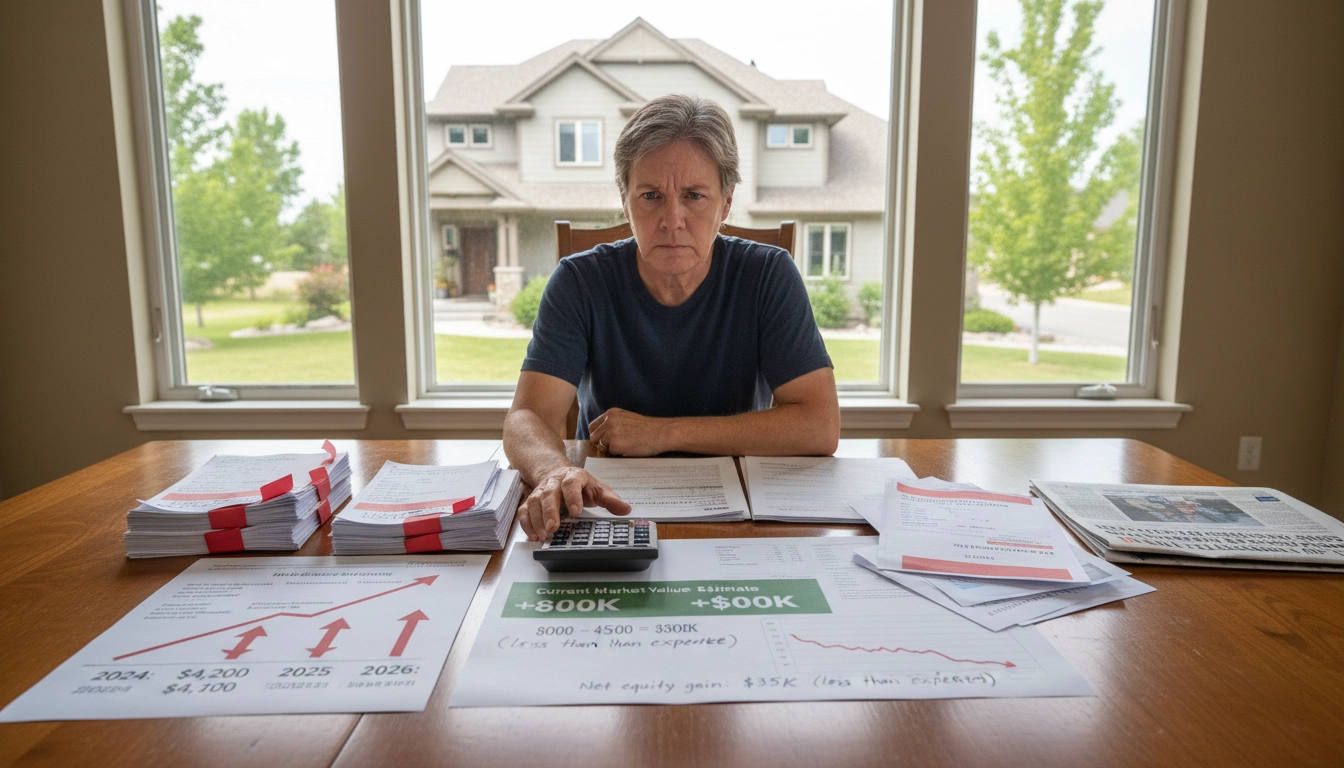
Homeowners and buyers across Eagle Idaho and the greater Boise Idaho area are asking an increasingly important question: are rising property taxes and maintenance costs on older and newer homes going to erode equity gains? With home values climbing and ownership costs following closely behind, the concern is understandable. However, equity erosion is not as straightforward as it may seem.
While higher taxes and upkeep costs can reduce annual cash flow, they don’t automatically cancel out appreciation. In fact, in strong markets like Eagle Idaho, long-term equity gains often remain resilient when approached strategically.
Understanding Home Equity in Eagle Idaho
Home equity is the difference between your home’s market value and the remaining balance on your mortgage. For example, if your home is worth $650,000 and you owe $350,000, you’ve built $300,000 in equity. This equity grows in two ways: as property values rise and as mortgage balances decline.
In markets with consistent demand—like Eagle Idaho—equity growth has historically outpaced inflation. According to data from the Federal Housing Finance Agency, home price appreciation across the Mountain West has remained strong over the past decade, despite fluctuations in interest rates.
Why Property Taxes Keep Rising
Property taxes increase primarily because assessed values rise alongside home prices. As Eagle Idaho real estate values climb, county assessors adjust valuations to reflect current market conditions. Local governments then use those revenues to fund schools, infrastructure, emergency services, and community development.
According to the Idaho State Tax Commission, property taxes are based on assessed value—not purchase price—which means homeowners benefit from appreciation but also shoulder higher tax obligations over time.
However, rising taxes do not reduce your home’s market value. Instead, they impact the cost of holding the asset, which matters most if appreciation slows.
Older Homes: Maintenance Can Add Up
Older homes in established Eagle Idaho neighborhoods often attract buyers with charm, mature landscaping, and proximity to amenities. Yet maintenance costs can increase more rapidly compared to newer construction.
Common expenses include:
-
Roof replacement
-
HVAC system upgrades
-
Plumbing and electrical modernization
-
Exterior paint and siding repairs
The National Association of Realtors notes that many maintenance expenses are value-preserving rather than value-adding, meaning they don’t necessarily increase resale price dollar-for-dollar (NAR Research).
Still, well-maintained older homes often appreciate strongly due to location scarcity and neighborhood desirability.
Newer Homes: Lower Maintenance, Same Tax Reality
Newer homes typically benefit from modern materials, energy efficiency, and builder warranties. For the first five to ten years, maintenance costs are often minimal. However, rising property taxes apply equally to new construction.
In fast-growing areas like the Boise metro, new homes can experience sharp assessment increases shortly after completion. While maintenance savings help offset those costs, taxes remain a fixed consideration in long-term equity planning.
Do These Costs Actually Erode Equity?
The short answer is not inherently.
Property taxes and maintenance costs affect net ownership returns, not your home’s intrinsic market value. Equity erosion only becomes a concern if:
-
Appreciation slows significantly
-
Ownership costs rise faster than income growth
-
Deferred maintenance leads to functional obsolescence
According to long-term housing trend analysis from Zillow Research, appreciation in desirable mid-sized metros has historically outweighed cumulative property tax increases over 10–20 year holding periods.
Strategies to Protect Equity Over Time
Smart homeowners take proactive steps to preserve and grow equity.
Appeal Property Tax Assessments
Many homeowners don’t realize they can challenge assessments. If comparable homes sold for less, an appeal may reduce your tax burden.
Focus on High-ROI Improvements
Projects that improve efficiency, livability, or curb appeal tend to yield the strongest returns. Remodeling Magazine’s annual Cost vs. Value Report highlights kitchens, bathrooms, and energy upgrades as consistent performers.
Budget for Maintenance
A common guideline is setting aside 1–2% of the home’s value annually for upkeep. This prevents deferred maintenance from becoming a value issue later.
Older vs. Newer Homes: Equity Perspective
| Factor | Older Homes | Newer Homes |
|---|---|---|
| Maintenance Costs | Higher over time | Lower initially |
| Property Taxes | Market-based | Market-based |
| Appreciation | Strong in established areas | Strong in growth zones |
| Flexibility | More renovation upside | Limited early |
Both categories can build wealth effectively. The key difference lies in predictability versus opportunity.
Market Forces Matter More Than Costs
Equity growth is ultimately driven by demand, inventory, and location. Eagle Idaho continues to benefit from lifestyle-driven migration, limited housing supply, and proximity to Boise’s employment base.
According to the U.S. Census Bureau, Idaho remains one of the fastest-growing states by inbound migration, reinforcing long-term housing demand across the Treasure Valley.
Bottom Line
Rising property taxes and maintenance costs deserve attention, but they are rarely deal-breakers in strong markets like Eagle Idaho. When appreciation, demand, and smart ownership decisions align, equity gains often remain intact—and substantial.
The most successful homeowners don’t avoid costs; they plan for them, manage them strategically, and leverage market conditions to their advantage.
FAQs
What happens to equity if property taxes keep rising?
Rising property taxes increase carrying costs, but they don’t directly reduce the market value of your home. If home values rise faster than tax increases, your equity can still grow.
Should I buy an older home with higher maintenance costs?
Older homes can offer character and established locations, but you should budget for upkeep and prioritize upgrades that add value.
Can I appeal my property tax assessment in Idaho?
Yes, homeowners can typically appeal their assessments if they believe their home is overvalued. Check with the county assessor’s office for the appeal process.
Do maintenance costs affect resale value?
Necessary repairs often preserve value, but only certain upgrades — like kitchen remodels or energy-efficient improvements — consistently improve resale value.
Is it better to buy a newer home to avoid maintenance costs?
Newer homes usually require less maintenance early on, but rising property taxes affect all homes equally. Your personal situation and long-term plans should guide your choice.


