
Many buyers exploring Eagle Idaho real estate quickly discover that rural and semi-rural properties sometimes rely on shared water systems. In fact, shared well water homes in Treasure Valley Idaho are fairly common outside city limits, especially in acreage communities surrounding Boise Idaho and Eagle Idaho.
At first glance, a shared well may sound complicated. However, with the proper agreements and inspections in place, these systems often function smoothly for decades. Buyers simply need to understand how ownership, maintenance, and lender requirements work before closing on a property.
As a top realtor in Eagle, Chris Budka regularly helps clients navigate these unique rural property features. Therefore, understanding the basics of shared wells can help you make a confident and informed decision when evaluating Eagle ID homes for sale.
What Is a Shared Well System?
A shared well is exactly what the name implies: a private groundwater well that supplies water to two or more homes. Instead of each property drilling its own well, several neighboring homes share one water source and distribution system.
These arrangements are particularly common in rural parts of Eagle ID, the outskirts of Boise Idaho, and other communities throughout the Treasure Valley. Properties with acreage or agricultural zoning often rely on this type of water infrastructure.
Typically, a shared well system includes:
-
One drilled well
-
A pump and pressure system
-
Water lines extending to each home
-
A legal shared well agreement
Although shared wells can serve anywhere from two to four homes, lenders generally prefer smaller systems. For example, many mortgage programs limit shared wells to four properties or fewer.
For buyers considering shared well water homes in Treasure Valley Idaho, reviewing the legal agreement tied to the well is essential before proceeding.
Why Shared Wells Are Common in Eagle and Rural Treasure Valley Areas
The Treasure Valley is known for its mixture of suburban neighborhoods and rural properties. While many neighborhoods within city boundaries use municipal water, homes located outside the city limits often rely on private wells.
This is especially true in Eagle Idaho, where large parcels, equestrian properties, and agricultural land are common. Drilling a single well that serves multiple homes can reduce installation costs and minimize land disturbance.
Additionally, shared wells often appear in older subdivisions developed before municipal infrastructure expanded outward from Boise Idaho. These neighborhoods maintain private water systems rather than connecting to city utilities.
For buyers moving to Idaho, this type of setup may be unfamiliar. However, shared wells are widely used throughout rural parts of the western United States.
The Importance of a Shared Well Agreement
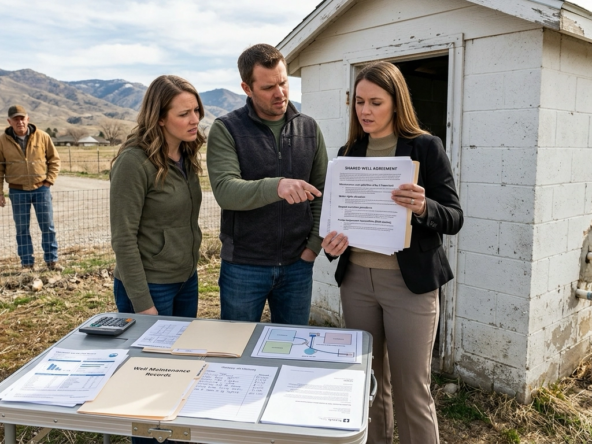
Perhaps the most important document tied to shared well water homes in Treasure Valley Idaho is the shared well agreement. This legally binding contract outlines how the well will be operated, maintained, and repaired among the participating property owners.
A strong agreement typically addresses:
-
Ownership of the well and equipment
-
Water usage rights for each property
-
Maintenance and repair responsibilities
-
Cost-sharing arrangements
-
Access to the well for servicing
-
Procedures if the well fails or requires replacement
Lenders often require this agreement to be recorded with the county before approving a mortgage. Without it, financing can become difficult or even impossible.
Additionally, the agreement should clarify property easements that allow neighbors access to the well site. Without proper easements, disputes could arise later.
Working with an experienced Eagle ID realtor ensures that buyers fully review and understand these documents before moving forward.
Water Quality Testing and Inspection Requirements
Water safety is another major factor when evaluating shared well water homes in Treasure Valley Idaho. Unlike city water systems, private wells are not monitored by municipal utilities.
Therefore, testing is essential during the home purchase process.
Most lenders require water quality testing for:
-
Bacteria (coliform or E. coli)
-
Nitrates
-
Nitrites
These standards are based on guidelines from the U.S. Environmental Protection Agency and other regulatory bodies.
In addition, buyers often choose to test for:
-
Hardness levels
-
Iron or mineral content
-
Arsenic
-
Agricultural contaminants
Because many rural areas around Boise Idaho include farmland, testing ensures that groundwater remains safe for household use.
Fortunately, most well systems in Eagle Idaho perform well in these tests. Still, verifying water quality provides peace of mind before purchasing a property.
Who Pays for Well Maintenance and Repairs?
One of the most common questions about shared wells involves maintenance costs. Naturally, buyers want to know who pays when equipment fails or repairs become necessary.
The answer depends entirely on the shared well agreement.
Most agreements divide expenses equally between the participating homeowners. For example, if four homes share a well, each owner typically pays 25% of repair costs.
Maintenance may include:
-
Pump replacement
-
Pressure tank servicing
-
Electrical repairs
-
Pipe leaks
-
Well rehabilitation
Meanwhile, major replacements—such as drilling a new well—can be more expensive. However, these costs are also usually shared between the properties.
Clear documentation prevents disputes and ensures everyone understands their financial responsibilities.
Lender Requirements for Shared Well Homes
Mortgage lenders often impose additional requirements for shared well water homes in Treasure Valley Idaho. Because the water system is privately managed, lenders want to confirm that the well is reliable and properly documented.
Typical lender requirements include:
-
A recorded shared well agreement
-
Maximum of four homes using the well
-
Adequate water production capacity
-
Safe water quality test results
-
Legal access to the well for maintenance
These guidelines are often referenced by organizations like the National Association of Realtors and various mortgage underwriting standards.
In some cases, lenders may also request documentation confirming that the well produces sufficient gallons per minute to supply all connected homes.
Working with the best realtor in Eagle ID can make this process smoother. Experienced agents know which documentation lenders expect and how to obtain it quickly.
Potential Advantages of Shared Well Systems
While some buyers initially hesitate about shared wells, these systems actually offer several benefits.
First, they reduce installation costs. Drilling a new well can cost thousands of dollars. Sharing that infrastructure spreads expenses among multiple homeowners.
Second, shared wells often deliver strong water pressure. Because they are professionally drilled and designed to support several homes, they can provide reliable water flow.
Third, properties with shared wells frequently sit on larger parcels of land. Many buyers searching for acreage, hobby farms, or quiet rural settings appreciate this feature.
These types of homes often appear among homes for sale in Eagle Idaho, particularly in the outskirts of town where open space is abundant.
Things Buyers Should Consider Before Purchasing
Despite their advantages, buyers should evaluate a few factors carefully when considering shared well water homes in Treasure Valley Idaho.
First, review the well agreement thoroughly. Understanding your responsibilities prevents surprises later.
Next, ask about the well’s age and production capacity. A well that produces strong water flow is less likely to create supply issues.
Buyers should also inquire about the number of homes connected to the system. Fewer homes generally mean fewer complications.
Finally, talk with neighbors if possible. Understanding how the well has been managed historically can reveal valuable insights.
These small steps help buyers feel confident about purchasing Eagle ID homes with shared water systems.
Why Local Expertise Matters When Buying Rural Properties
Rural properties often come with unique considerations that differ from traditional suburban homes. Water systems, septic systems, acreage zoning, and agricultural easements all require careful evaluation.
That’s why working with a knowledgeable best realtor in Eagle ID can make a major difference.
An experienced Eagle ID realtor understands the nuances of Eagle Idaho neighborhoods, local regulations, and lender requirements. They can also coordinate inspections, review legal documents, and ensure buyers avoid costly surprises.
For anyone exploring Eagle ID homes for sale, having a trusted local expert simplifies the entire process.
FAQs
Are shared wells common in Eagle Idaho real estate?
Yes, shared wells are fairly common in rural areas of Eagle Idaho, particularly on acreage properties located outside city limits. Many homes in these locations were developed before municipal water systems expanded, making shared wells a practical solution.
Can you get a mortgage on a home with a shared well?
Yes, most lenders will approve financing for homes with shared wells. However, the property must meet specific requirements such as a recorded well agreement, safe water quality tests, and typically no more than four homes connected to the well.
How much water should a shared well produce?
A well should produce enough gallons per minute to support all connected homes. Requirements vary by lender, but most want to see reliable water production that meets household demand.
Who maintains a shared well?
Maintenance responsibilities are typically outlined in the shared well agreement. In most cases, all homeowners sharing the well contribute equally to maintenance and repair costs.
Is a shared well a deal breaker when buying a home?
Not at all. Many buyers successfully purchase homes with shared wells every year. As long as the well agreement is clear and the water system functions properly, shared wells can be a reliable and cost-effective water source.
Bottomline
Shared wells are a common feature of rural living throughout Eagle Idaho and the broader Treasure Valley. While they require a bit more due diligence than municipal water systems, they are often dependable and well-managed.
Understanding agreements, testing requirements, and lender guidelines ensures buyers can approach these properties with confidence. Ultimately, with the right information and expert guidance, purchasing shared well water homes in Treasure Valley Idaho can be a smooth and rewarding experience.
If you’re exploring Eagle Idaho real estate or considering moving to Idaho, working with Chris Budka Real Estate can help you navigate every step of the process and find the right property for your lifestyle.