


Quick Answer
You can sell your Boise house to a tenant buyer through a lease-to-purchase or seller-financing arrangement, but the strategy carries real risks. The biggest are a buyer backing out after two years, deferred maintenance, and locking in a price below where the market lands. These deals work best when the contract is airtight, the option fee is sizable, and an experienced local agent and attorney structure the terms. In Boise’s still-tight market, a sharp price or rate buydown is often the cleaner path.
Summary
A tenant-buyer offer promises premium rent and a built-in buyer, yet it shifts several risks squarely onto you. This guide breaks down how lease-options and seller financing work in Idaho, what can go wrong in a slower pocket of the market, and how to protect yourself before you sign.
Should I Sell My Boise House to a Tenant Buyer? What the Risks Really Are
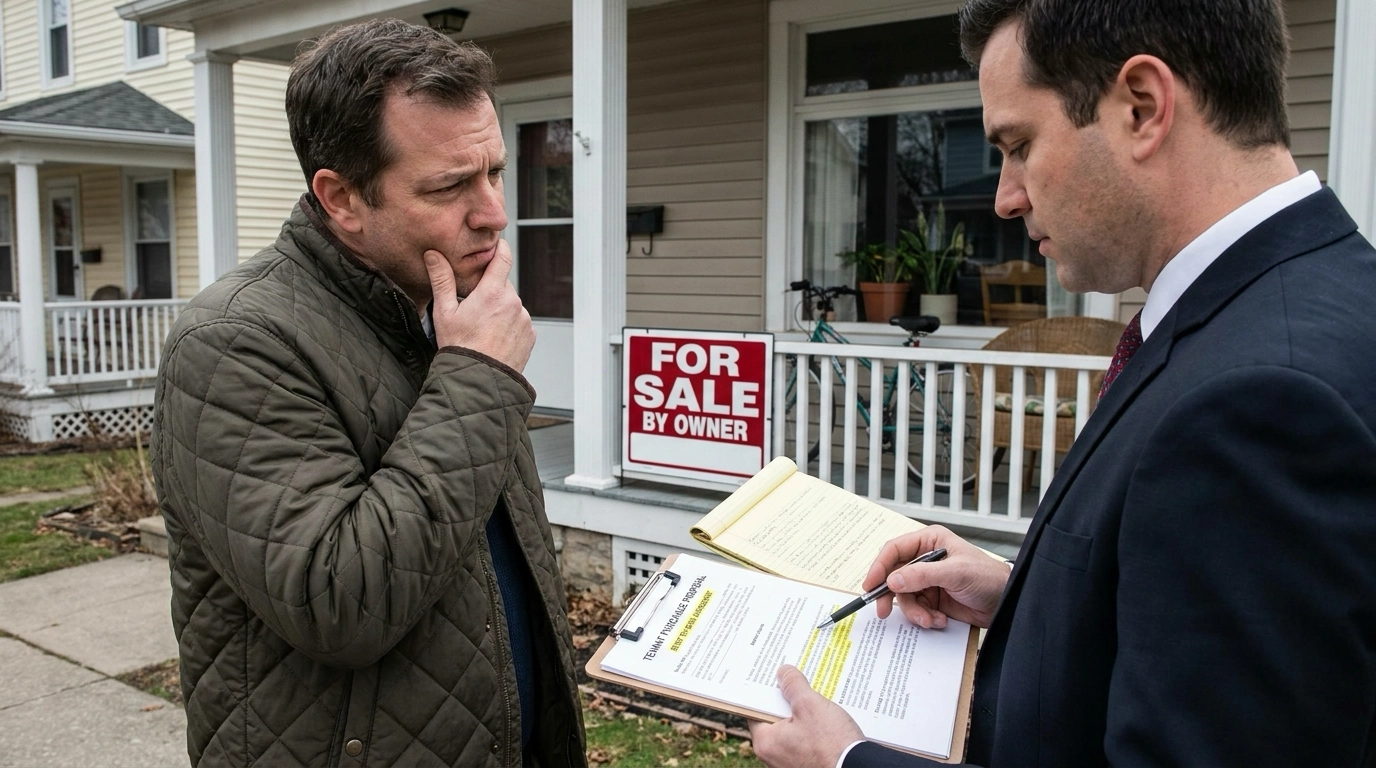
The idea sounds appealing when showings feel slow. A tenant offers above-market rent and promises to buy in a couple of years. Suddenly your monthly carrying costs seem to vanish. Still, the decision to sell my Boise house to a tenant buyer deserves a hard look. The structure quietly shifts risk from the buyer onto you. Moreover, “tenant buyer” can mean very different things, and each version behaves differently when a deal goes sideways.
What “Selling to a Tenant Buyer” Actually Means
Most of these arrangements fall into three buckets. A lease-option gives the tenant the right, but not the obligation, to purchase later. A lease-purchase, by contrast, legally commits them to buy. Seller financing, often called a contract for deed, transfers possession now while you hold the note. You then collect payments over the agreed term. In practice, the label on the paperwork controls who pays the taxes and how quickly you can recover the home. Each path is legal in Idaho, yet each triggers different rules on default and disclosure. For example, a lease-option can lapse quietly. A contract for deed, meanwhile, may require a formal forfeiture process to unwind. There are tax angles too, since seller-financed gains are often reported over several years rather than all at once.
The Real Risks in a Slower Local Market
Your instinct about the two-year walk-away is the right worry. Under a typical lease-option, the tenant can simply decline to buy. Meanwhile, you keep the option fee and any rent premium. Yet you also inherit two years of wear, a dated listing, and another round of prep work. Additionally, tenant-buyers don’t always maintain a home the way true owners do, so the condition risk is real. A buyer who cannot qualify for a mortgage today may still not qualify in 2027, either. Vacancy or turnover can also eat into the premium rent that made the offer attractive. Repairs you would normally hand to a brand-new owner can land right back on you. Seller financing adds another layer of exposure. Because if the buyer stops paying, you must pursue remedies to regain title, and that costs both time and money. Finally, if you still owe a mortgage, most loans carry a due-on-sale clause your lender could enforce.
Price is the other quiet trap. When you lock in a number today, you gamble on where values sit two years out. Boise has appreciated steadily for years. Therefore a fixed future price could leave real equity on the table.
How Boise’s Market Changes the Math
Here is where local context matters. Even when your street feels quiet, the broader Boise market remains tight. Inventory has hovered near a month and a half of supply, and well-priced homes still sell in weeks rather than months. In other words, a slow response often signals a pricing or presentation problem, not a dead market. Population growth across the Treasure Valley continues to fuel steady demand. Buyers keep migrating in from higher-cost states, and that inflow supports local prices. Consequently, a standard sale may be far more achievable than it feels right now. Ongoing development in the City of Boise also keeps adding inventory that shapes your competition. Your Ada County assessment and recent comparable sales give you a realistic pricing baseline. Before choosing terms over price, study the best time to sell a rental property with tenants. Similarly, weigh a cash or financed offer, which can reveal that you don’t need a two-year workaround at all.
Ways to Protect Yourself — and When to Say No
If you still like the concept, structure it defensively. First, require a substantial, non-refundable option fee so the buyer keeps real skin in the game. Next, set the purchase price with future appreciation in mind, not just today’s figure. Then spell out who handles repairs and routine upkeep in writing. Screen the tenant carefully, and ask for proof they are actively working toward mortgage approval. Because property disclosures still apply in Idaho, document the home’s exact condition at move-in. Above all, loop in both an attorney and an experienced Eagle Idaho realtor before anything gets signed. A weak contract, after all, is where most of these deals quietly fall apart. Get every promise in writing, since verbal side agreements rarely survive a dispute.
It also helps to remember that a tenant-buyer deal is not your only lever. A modest price adjustment, a rate buydown, or a targeted seller concession can attract a fully qualified buyer without the multi-year gamble.
Bottom Line
Selling to a tenant buyer can bridge a gap, but it trades certainty for the promise of a future sale. Given how tight the Boise and Treasure Valley market still is, many sellers reach a cleaner outcome by pricing sharply and selling outright. Ultimately, the smartest step is to compare both paths with someone who structures these deals for a living. If you want a candid, no-pressure read on your options, reach out to Chris Budka Real Estate today.
Frequently Asked Questions
What is the difference between a lease-option and seller financing in Idaho?
A lease-option gives your tenant the right to buy later without obligating them, while seller financing (a contract for deed) sells the home now and lets you collect installment payments as the note holder. The practical difference is control and risk. With a lease-option, you keep title, and the tenant can walk away, usually forfeiting the option fee. With seller financing, the buyer takes possession immediately and is treated much like an owner, so recovering the property after a default can require a formal legal process. Both are legal in Idaho, but they carry different tax, disclosure, and default consequences. The right choice depends on your timeline, your risk tolerance, and whether you still owe a mortgage.
What happens if my tenant buyer backs out after two years?
If your tenant buyer backs out of a lease-option, you generally keep the non-refundable option fee and any above-market rent, but you land back at square one on the sale. That means re-listing a home now two years older, often with added wear and a fresh need for prep and staging. You also forfeit the appreciation you might have captured on the open market during that window. This scenario is the single biggest reason sellers regret these deals. To soften the blow, set a meaningful option fee, define maintenance responsibilities in writing, and confirm the tenant is genuinely progressing toward mortgage qualification before you sign anything.
Can I sell a Boise home to a tenant buyer if I still have a mortgage?
Yes, but an existing mortgage adds real risk, so proceed carefully. Most home loans include a due-on-sale clause, which lets your lender demand full repayment if you transfer ownership through seller financing or a contract for deed. A standard lease-option is less likely to trigger it, since title does not change hands until the buyer exercises the option. Even so, you stay responsible for that mortgage while the tenant lives there, and any missed payment on your end still damages your credit. Before you sell a Boise home to a tenant buyer with a loan in place, review your mortgage terms and consult both your lender and a real estate attorney.
Is selling to a tenant buyer a smart move in Boise’s current market?
For most sellers, a tenant-buyer deal is not the best first option in today’s Boise market. Inventory remains tight at roughly a month and a half of supply, and well-priced homes continue to sell in weeks, not months. When a property lingers, the cause is usually pricing, condition, or marketing rather than a shortage of buyers. A tenant-buyer arrangement trades a clean, certain sale for the promise of one later, plus two years of added risk. It can make sense in narrow situations, such as a hard-to-finance property or a niche buyer pool. Still, compare that path against a sharper price or a rate buydown first.
How do I protect myself when selling to a tenant buyer in Idaho?
Protect yourself by treating the contract as the heart of the deal, not an afterthought. Require a substantial, non-refundable option fee so the buyer has real skin in the game, and set the purchase price with future appreciation in mind. Spell out who handles repairs, taxes, and insurance, and document the home’s condition at move-in. Screen the tenant’s finances and confirm they are working toward mortgage approval. Because Idaho disclosure laws still apply, keep thorough records throughout the term. Most importantly, involve both a real estate attorney and an experienced local agent before signing. A well-structured agreement is what separates a workable deal from a costly headache.