


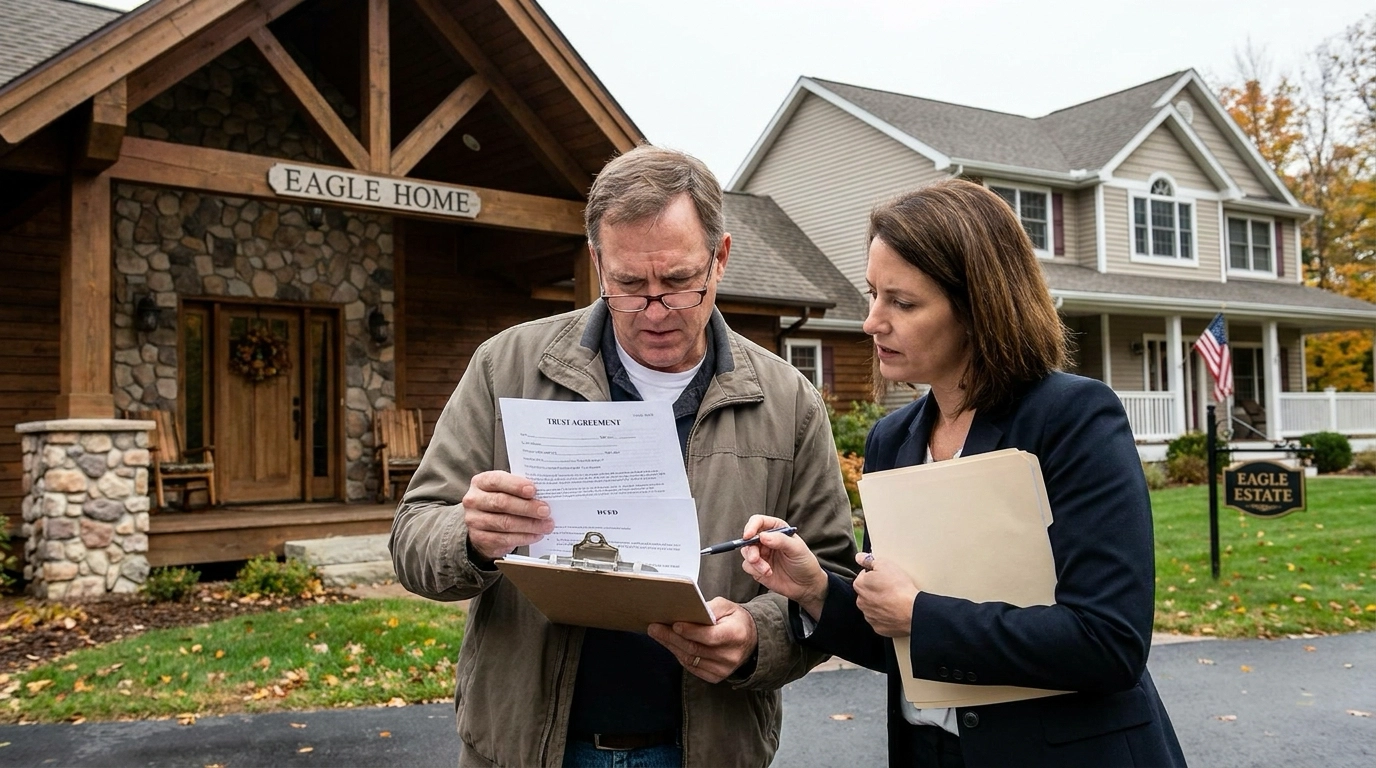
Quick Answer: In Idaho, a trust-owned home is sold through a listing agreement signed by the trustee — not the underlying owner — and Idaho brokers confirm that authority against the trust documentation before the listing goes live. Commission works differently, too: since the 2024 NAR settlement, sellers negotiate their own listing fee separately from whatever they choose to offer a buyer’s agent.
Summary: Selling a home held in a trust in Eagle, Idaho involves a few extra steps most sellers don’t expect, from trustee signatures to updated commission rules. This guide walks through who signs what, how pricing works in today’s market, and what happens between listing and closing.
How Do You Sell a Trust-Owned Home in Eagle, Idaho?
Selling a trust-owned home in Eagle, Idaho works a little differently than a standard sale, and most sellers only discover the paperwork quirks once they sit down with an agent. However, the process isn’t complicated once you understand who actually signs the listing agreement and how Idaho brokers verify that authority. Eagle, tracked by the City of Eagle and the U.S. Census Bureau as one of the fastest-growing communities in the Treasure Valley, continues to draw downsizers, retirees, and relocating families who often inherit or manage property through a trust. For trustees handling a parent’s estate or a surviving spouse settling a family trust, getting the sequence right protects both the timeline and the sale price.
Who Signs the Listing Agreement When a Trust Owns the Home?
When a property sits inside a revocable living trust, the trustee signs on the trust’s behalf rather than as an individual owner. Idaho brokers typically ask to see the section of the trust naming the trustee before drafting the paperwork, since that document proves signing authority. The Idaho Real Estate Commission requires brokers to confirm that authority before a property is entered into the MLS. Consequently, every signature line carries an added “as Trustee” designation beside the name. This detail matters because a buyer’s title company cross-references it against the recorded deed during escrow. If you’re unsure who signs the listing agreement on a trust-owned property, ask your agent to walk through the trust documentation before you sign anything.
How Do Idaho Sellers Negotiate Commission Since the NAR Settlement?
Real estate commission structures changed nationally in August 2024, and Eagle sellers are still adjusting to what that means in practice. Instead of one bundled rate covering both sides of a sale, sellers now set their listing fee independently and decide separately whether to offer compensation to a buyer’s agent. A seller might agree to a 3% listing fee, for example, and leave buyer-side compensation open until offers come in. Meanwhile, buyer’s agents must now have a signed agreement with their clients before showing homes, a requirement the National Association of REALTORS® confirmed as part of the settlement terms. This shift gives sellers more control, though it also means the conversation about who pays what tends to happen later, usually once an offer lands on the table.
How Should You Price a Trust-Owned Home in Today’s Eagle Market?
Eagle’s median home price has hovered in the high $700,000s to low $900,000s through mid-2026, according to Realtor.com and other market trackers, though the exact figure depends heavily on lot size, square footage, and location within the city. Therefore, pricing a trust-owned home requires the same disciplined comp analysis as any other listing, no more and no less. Agents pull sold comparables within a tight radius, adjust for lot size and finish level, and decide whether to price at, above, or below that calculated range. Sellers sometimes push to price above the top comparable hoping for a premium buyer, but that strategy usually just stretches out the days on market instead. If you’re weighing whether to list high or list low, remember the first two weeks generate the most buyer traffic, so overpricing during that window typically costs more than it gains.
What Happens Between Listing and Closing?
Once the trustee signs and the price is set, the timeline moves quickly. Photography, a title search cross-referenced against Ada County Assessor records, and a seller property disclosure usually happen within the first two weeks. Additionally, Idaho requires sellers to disclose known material defects, so trustees should gather utility, HOA, and inspection records early rather than scrambling once an offer arrives. Finally, once escrow opens, the process runs much like any other sale, with earnest money, inspections, and financing contingencies moving toward closing, generally 30 to 45 days out depending on the buyer’s loan type.
Bottom Line: Selling a trust-owned home in Eagle, Idaho comes down to three things: confirming the trustee’s signing authority, understanding how commission is negotiated under the new rules, and pricing the home against real Treasure Valley comps rather than wishful thinking. Working with a top realtor in Eagle who handles trust sales regularly makes each of those steps far less stressful for the family involved.
FAQs
Does a trustee need special legal documents to sell a home in Eagle, Idaho?
Yes, a trustee typically needs to provide the brokerage with the trust document (or the certification-of-trust page naming the trustee) before a listing agreement can be signed. This paperwork proves the trustee has legal authority to act on the trust’s behalf, and Idaho title companies will request the same documentation again during escrow to confirm the deed matches. Sellers who gather these records early, along with the property’s legal description, avoid delays once an offer comes in. If the trust has co-trustees, all named trustees generally need to sign unless the trust document specifically grants one trustee sole authority to sell.
How much commission do sellers pay when listing a home in Eagle, Idaho in 2026?
There’s no fixed number anymore, since sellers now negotiate their listing fee directly with their agent, separate from any compensation offered to a buyer’s agent. Many Eagle listings still land somewhere in the 5% to 6% combined range when a seller chooses to offer buyer-agent compensation, but that figure is fully negotiable and depends on the property’s price point, condition, and how competitive the local market is at listing time. Sellers can also choose to offer nothing to buyer’s agents upfront and negotiate that piece later, once an offer is presented. A local agent familiar with current Eagle market conditions can walk through realistic scenarios before you sign.
Can you sell a home in Eagle, Idaho before probate closes if it’s held in a trust?
In most cases, yes, because a properly funded revocable living trust avoids probate entirely for real property titled in the trust’s name. The trustee can list, negotiate, and close the sale using their authority under the trust document without waiting on a probate court. This is one of the main reasons families set up living trusts in the first place, since it keeps real estate transactions moving even after the original owner has passed away. If the home was never formally transferred into the trust before death, however, probate may still be required, so it’s worth confirming the property’s title history early.
How long does it take to sell a home in Eagle, Idaho right now?
Recent market data shows Eagle homes going pending in roughly two to eight weeks depending on price point, condition, and how the property is positioned relative to comparable listings. Homes priced accurately for their size, lot, and finish level tend to sell fastest, while overpriced listings can sit for months before a price adjustment brings in serious buyers. Seasonal timing matters too, since spring and early summer typically bring more buyer activity than late fall or winter. A trustee working within a set timeline should plan for photography, disclosures, and title verification to add roughly one to two weeks before a home is market-ready.
What disclosures does Idaho require when selling a trust-owned property?
Idaho law requires sellers, including trustees acting on a trust’s behalf, to complete a seller property disclosure form covering known material defects such as roof condition, water intrusion, structural issues, and system functionality. This applies regardless of who holds title, so a trustee answers these questions based on what they know about the property’s condition, not what a deceased or incapacitated original owner may have known. If the trustee genuinely doesn’t know the answer to a disclosure question, marking it as unknown is appropriate and expected, since buyers and their inspectors are responsible for their own due diligence beyond what’s disclosed.