

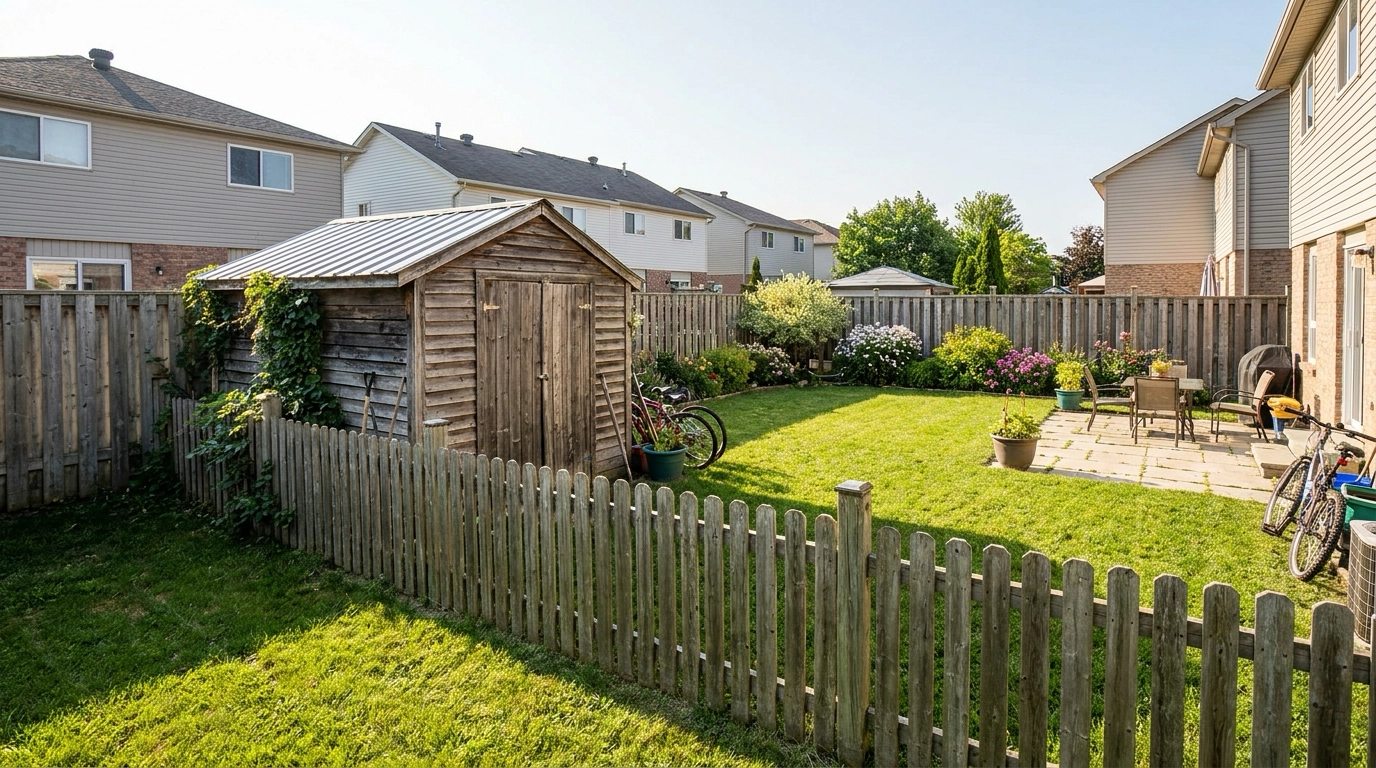
Quick Answer: Yes, in most cases your closing can still happen even if a shed is encroaching on the neighbor’s lot. Buyers, sellers, lenders, and the title company typically resolve it before the closing date through a boundary survey, an encroachment agreement, a boundary-line adjustment, or by moving the structure. In Eagle, Idaho, most encroachments become negotiation points rather than deal-breakers.
Blog Summary: A shed crossing the property line often surfaces during a survey or title review, yet it rarely kills a Treasure Valley sale on its own. This guide explains how encroachments get discovered, what your lender and title company require, and the practical fixes that keep your Eagle closing on schedule.
Discovering that a shed sits a few inches over the line can rattle anyone days from the closing table. Fortunately, a shed encroaching on the neighbor’s lot rarely stops a sale outright in Eagle, Idaho. Most deals still move forward once the parties agree on a fix. However, the situation deserves a clear plan, because lenders and title companies want boundaries settled before any money changes hands. Therefore, the smartest move is to understand your options early rather than panic.
An encroachment simply means a structure crosses onto land it does not legally sit on. Sheds, fences, and driveways are the usual culprits. Consequently, the same problem shows up in transactions across the Treasure Valley every month. Meanwhile, the good news is that the fixes are well established and often faster than sellers expect.
How an Encroaching Shed Gets Discovered
Most encroachments surface during a boundary survey or a title review before closing. For example, a lender may order a survey and the surveyor flags the shed crossing the recorded line. Occasionally, a sharp-eyed neighbor raises the issue instead. Either way, the discovery usually happens while the deal is still in escrow, which gives everyone time to respond.
Sellers can get ahead of this by ordering a survey and reviewing property disclosures before listing. Moreover, a clean survey on file reassures buyers and speeds up the title work. Similarly, buyers who request a survey contingency protect their right to renegotiate if a boundary problem appears. A thorough home inspection can also reveal structures that look suspiciously close to a fence line. Ultimately, early detection turns a scary surprise into a manageable checklist item.
What Your Lender and Title Company Actually Require
Your lender cares about one thing above all: clean, insurable title on the collateral. Consequently, if a shed encroaches, the title company may list it as a survey exception on the commitment. That exception signals the underwriter will not insure boundary claims tied to the structure. However, most encroachments can be cleared with the right paperwork before closing.
Title insurers typically accept several remedies here. For example, an encroachment agreement or a signed boundary-line adjustment can satisfy the underwriter. In other cases, an affidavit and an endorsement resolve the exception. Because rules vary by company, ask your title officer and lender up front exactly what they need. Buyers who want extended coverage will usually need a current survey to waive the standard boundary exception. Meanwhile, the Idaho Real Estate Commission offers guidance that helps buyers and sellers understand their contract obligations during this process. As a result, a quick call to your title team often prevents last-minute delays.
Ways to Fix a Shed Encroachment Before Closing
Several practical fixes keep the timeline intact. First, the simplest option is often to move the shed back onto the correct lot. Next, if moving it is impractical, neighbors can record an encroachment agreement allowing the structure to stay. Instead of a permanent agreement, some parties negotiate a small boundary-line adjustment through the county. For example, one owner sells or transfers the sliver of land, and a corrective deed and new survey get recorded with the Ada County Assessor.
Occasionally, the shed simply needs to come down, and the seller handles removal as a condition of sale. Meanwhile, the parties document every step to protect the title. Permitting questions sometimes route through the City of Eagle, especially for structures near setbacks or easements. Finally, a skilled agent coordinates the surveyor, title officer, and attorneys so nothing stalls the closing date.
How This Plays Out in the Eagle and Treasure Valley Market
Eagle sits among the most sought-after communities in the region, drawing families relocating from across the country. As of mid-2026, homes here sell for a median near the high-$700Ks to low-$800Ks, and properties often go pending within a few weeks. Inventory has loosened compared with the frenzy years, so days on market can vary sharply by price point and condition. Still, well-located homes continue to attract motivated buyers. Because the market stays competitive, buyers rarely walk away over a fixable boundary issue. Instead, they lean on their agent to negotiate repairs, credits, or agreements.
For example, a buyer might accept a seller credit while the encroachment agreement gets recorded after closing. Alternatively, the seller resolves everything before funding to keep the buyer’s lender comfortable. Consequently, the deal closes, and both neighbors gain a clear, recorded boundary. Guidance from the National Association of REALTORS® reinforces how disclosure and documentation reduce risk for everyone. Working with the best realtor in Eagle ID gives you a steady hand through each of these steps.
Bottom Line
A shed encroaching on the neighbor’s lot is a solvable problem, not a closing killer. Typically, a survey, an agreement, a boundary adjustment, or removal clears the path forward. Moreover, addressing it early keeps your lender, title company, and neighbors aligned. Therefore, if you’re buying or selling in Eagle and a boundary question surfaces, call Chris Budka Real Estate. We’ll turn that surprise into a smooth, on-time closing.
Frequently Asked Questions
Can a lender deny my loan because of a shed encroachment?
A lender can pause funding, but an encroaching shed rarely results in an outright denial. Lenders require clean, insurable title on the property securing the loan, so if a shed crosses the neighbor’s line, the title company may flag it as a survey exception. Once you clear that exception—usually with an encroachment agreement, a boundary-line adjustment, or removal—the loan proceeds normally. The key is timing: most issues surface during escrow, which leaves room to resolve them before closing. In the Treasure Valley, experienced agents and title officers handle these situations routinely, so a proactive conversation with your lender almost always keeps the financing on track.
Who pays to fix an encroaching shed before closing?
Responsibility is negotiable and depends on who owns the shed and how the contract reads. When the seller’s shed encroaches on the neighbor, the seller usually covers the survey, the encroachment agreement, or the removal as a condition of sale. If the neighbor’s structure encroaches onto the property you’re buying, the seller and neighbor typically work out the fix. However, buyers sometimes accept a credit and handle the resolution afterward to keep the timeline moving. In Eagle’s competitive market, cost allocation often becomes part of the broader negotiation, so having a skilled agent draft the right contract language protects your interests and prevents disputes later.
What is an encroachment agreement and how does it work?
An encroachment agreement is a recorded document in which the affected property owner permits a neighboring structure to remain on or over the boundary line. It works by acknowledging the encroachment, defining maintenance responsibilities, and clarifying that the arrangement does not transfer ownership of the land. Title companies frequently accept this document to clear a survey exception, which lets your closing proceed. The agreement gets recorded with the county so it binds future owners and shows up in any title search. For an Eagle shed sitting a few inches over the line, this is often the fastest, least expensive path to a clean, insurable title.
Should I get a boundary survey before buying a home in Eagle?
Yes, a boundary survey is a smart investment, especially on older properties or lots with fences that look off-line. A survey confirms that the house, garage, shed, and other improvements sit entirely on the parcel you’re purchasing, and it reveals encroachments or easement issues before they become expensive surprises. Standard title policies exclude boundary-related claims unless a current survey supports extended coverage, so ordering one strengthens your protection. In Eagle and across the Treasure Valley, where lot sizes and acreage parcels vary widely, a survey brings clarity and confidence to the closing table and remains valuable when you later refinance or sell.
How long does it take to resolve a shed encroachment?
Resolution time ranges from a few days to several weeks, depending on the fix. Simply relocating a shed onto the correct lot can happen almost immediately. An encroachment agreement usually takes one to two weeks once both owners agree, since it requires drafting, signatures, and recording. A boundary-line adjustment with a corrective deed and new survey takes longer, because it involves the surveyor and county recording. Because most encroachments are discovered during escrow, there’s typically enough time to resolve them without delaying closing. Working with a local agent who coordinates the surveyor, title officer, and neighbors is the surest way to keep everything on schedule.